Starting a Creative Writing Notebook: A Beginner's Guide to Daily Practice
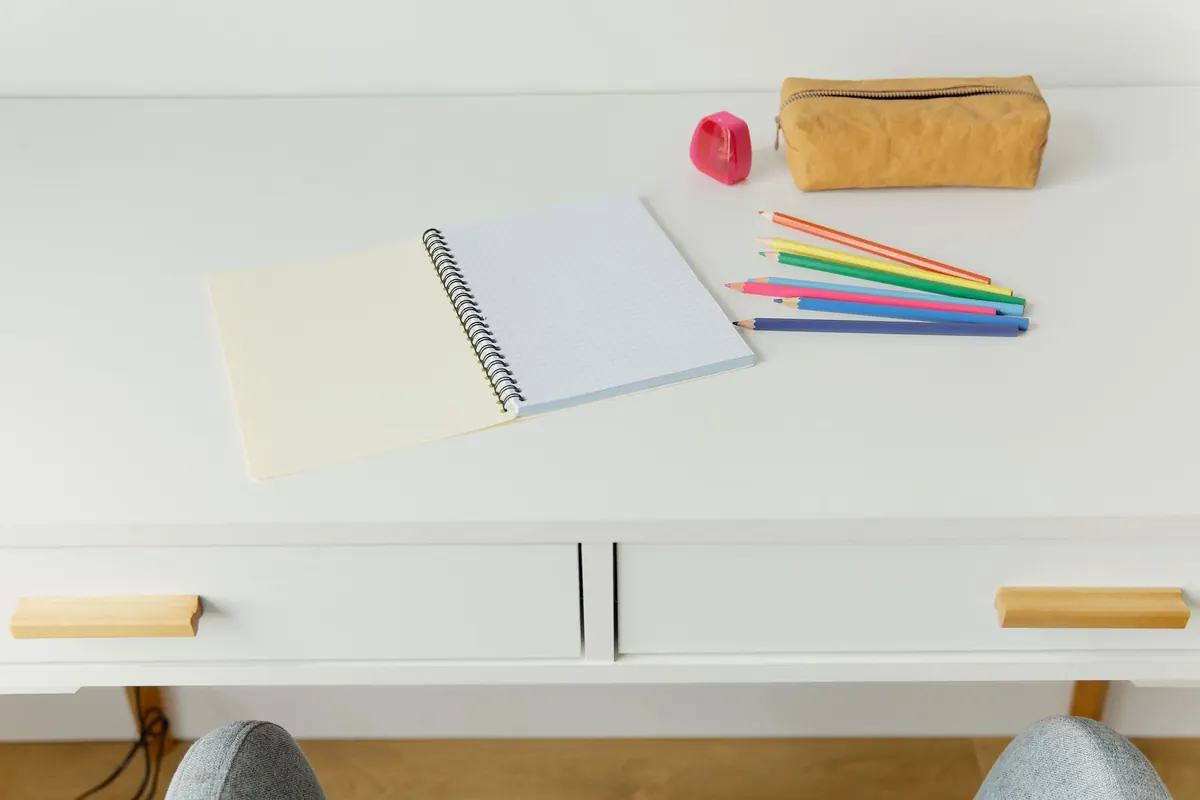
Most writers who have kept a notebook for years did not begin with a system. They began with a cheap exercise book, a pen that worked, and a suspicion that good sentences were going to waste. That is the whole entry fee. The rest — which notebook, which pen, what time of day — is a preference you can revise later.
What matters is that the habit is small enough to survive a bad week and dull enough that you never feel you have to perform in it. Here is how to set one up, fill it, and keep it going past the first fortnight.
Choose a Notebook You Will Actually Carry
An A5 notebook with a soft cover fits most pockets and bags. A6 is even better if you walk everywhere; A4 stays at home and is therefore half a notebook. Buy something plain and inexpensive enough that you are not afraid to ruin it. A beautiful leather-bound book with gilt edges creates a small, quiet pressure to be brilliant, and that pressure is the fastest way to empty pages.
Keep one notebook at a time. The urge to run four notebooks — one for dreams, one for dialogue, one for lists — is a way of feeling organised without writing anything.
Paper or screen?
Both work, but they do different jobs. Paper is slower, which is useful: the hand cannot keep up with the mind, so the mind has to choose. A phone is always with you and always full of distractions. If you write on a phone, use a plain notes app with no folders and no formatting, and keep it on a single, endlessly scrolling page. Try one for a week and notice which one you actually reach for.
Decide What Goes In
The commonest mistake is treating the notebook as a place for finished thoughts. It is not. It is a place for raw material, and raw material is untidy by nature. Useful things to catch:
- Overheard speech, with no context attached — a fragment from a bus queue, a nurse, a neighbour.
- Images: light on wet pavement, a dog asleep in a shop doorway.
- Questions you cannot answer. What would she have done if he had said yes?
- First lines with no story behind them yet.
- Names, place names, job titles, makes of car.
- Complaints, grudges, small humiliations. Fiction runs on these.
- Lists: ten things in your kitchen drawer; five lies you told last year.
- Diagrams, floor plans, family trees, rough maps.
Write in whatever hand you like. Do not cross out, do not tidy, do not decide whether it is any good. Judgement is a later job, and it can wait.
Set It Up in Twenty Minutes
- Write your name and a contact detail inside the front cover, plus a line asking whoever finds it to return it.
- Leave the first two pages blank. That is your index. Add subjects and page numbers as the book fills.
- Number the pages lightly in the top corner, ten at a time, so numbering never becomes a reason to stop.
- Turn to page three, write today's date, and put one sentence underneath it. Anything will do.
- Agree a marking system with yourself: a star for material worth revisiting, a small box for a phrase you want to use again, a question mark for anything you do not yet understand.
- Decide where the book lives. Not "somewhere in my bag" — a specific pocket, or a specific corner of the desk.
The whole job takes less time than making a cup of tea. Do it now, while the intention is still warm.
The Daily Practice
Three lines, five minutes
Anchor the writing to something you already do: while the kettle boils, on the train, last thing before the light goes off. Write three lines. A line can be one word. The only firm rule is that the date goes down first, because a dated page tells you the truth about your own rhythm.
Aim for noticing, not writing
A reliable prompt is: one thing I noticed today. Keep it concrete. "The bus driver hummed the same four notes at every stop" is a line. It cost nothing, and it is worth more than a page of throat-clearing about how you have no ideas. Detail is the currency; opinion can be earned later.
Keep a pen with the book
A notebook without a pen is a brick. Tape a cheap biro to the cover if you have to.
When the Pages Stay Blank
Some days nothing arrives. That is not a sign that the habit has failed; it is what a habit looks like on a Tuesday. A few things that get the pen moving again:
- Copy out a paragraph you love by hand. Copying is not cheating. It teaches rhythm through the wrist.
- Write badly on purpose. "This is a bad sentence. Here is another one."
- Describe an object within reach using exactly seven words.
- Write about not writing, in the flat tone of a weather report.
Treat prompts as keys, not cages. If the prompt does not fit what you are carrying that day, ignore it and write the thing you were avoiding instead.
Reading Back Without Judging
Once a month, sit down with the notebook and a pencil. Read it the way you would read someone else's shopping list: with curiosity and no verdict. Mark anything that still has heat. A phrase that embarrassed you in March may be the line you need in June.
Anything with legs gets copied into a second place — a drafting notebook, a computer file, the back pages of the same book. The notebook is a quarry, not a book. Most of what you write will be rubble, and the rubble is not waste; it is what you dig through to reach the stone.
Keeping the Habit Going
Forgive gaps. A notebook with three entries for March is not a failure, it is a record. Keep the book visible rather than filed away, restock your pens before they run out, and if you miss a week, write one line about the week you missed — that is a fair entry.
Before buying a new notebook, read the old one. Most people who think they have nothing to write about have forty pages of unused material sitting under a coffee cup. The reward for all this is not a filled notebook. It is that you begin to look up more, and that the world starts handing you sentences. Carry the book, write the date, and take whatever arrives.
Photo: Darina Belonogova / Pexels